Number Writing Practice 1-20 Worksheets: A Design Asset for Learning
In the world of educational design, the most effective tools are those that blend rigorous pedagogical structure with inviting, intuitive aesthetics. For designers and creators working in the education sector, the Number Writing Practice 1-20 Worksheets represent a foundational asset. This collection of 81 printable worksheets is not merely a set of exercises; it is a carefully crafted visual system designed to build number literacy through a progressive, multi-sensory approach. Understanding its design principles reveals how quality creative assets can transform a simple learning objective into an engaging, professional experience.
Anatomy of an Effective Educational Design System
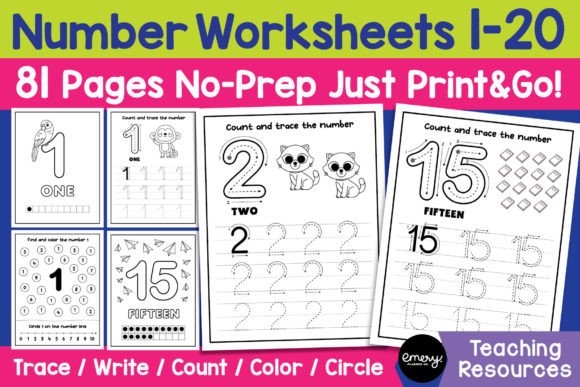
The power of this worksheet bundle lies in its structured, layered approach to visual communication. It moves beyond rote memorization by incorporating three distinct, visually cohesive activities that build upon each other, mirroring a thoughtful design workflow. This systematic progression ensures that learners are not just seeing numbers but interacting with them in varied, reinforcing ways.
- Count and Color (20 Worksheets): This initial layer focuses on visual hierarchy and object recognition. The clean, black-and-white line art is intentionally minimalist, a key principle in modern graphic design that reduces cognitive load. The design challenges the child to establish a one-to-one correspondence between numeral and quantity, a fundamental concept in data visualization.
- Trace and Write (40 Worksheets): Here, the focus shifts to typography and motor skill development. The letterforms are crafted with clear, bold strokes and guided tracing paths, demonstrating an understanding of UX design for a young audience. This section emphasizes the physical act of forming numbers, reinforcing muscle memory through repetition—a core tenet of practice-based learning.
- Find, Color, and Circle (20 Worksheets): This activity introduces a layer of visual search and discrimination. It functions like a simple UI design challenge, where the user must scan a field of information to isolate specific data points (the target number). This strengthens attention to detail and reinforces number recognition in a varied context.
Practical Applications and Creative Integration
While designed for preschool through first-grade, the underlying design of these worksheets offers a blueprint for creators. The consistent 8.5x11-inch dimension, high-resolution 300 dpi files, and dual PDF/JPEG formats speak to a professional understanding of print design and digital asset management. Here’s how designers and educators can leverage such assets:
- Brand Identity for Educational Products: Use the consistent visual style of the worksheets as a springboard to develop a full brand identity for a tutoring service, educational app, or children’s book series. The monochromatic palette is a versatile starting point for adding a custom color palette.
- Marketing and Social Media Content: The worksheets themselves are excellent social media graphics for parenting blogs, teacher influencers, or educational product launches. They provide immediate, tangible value to the audience, building trust and engagement.
- Packaging and Merchandise: The charming, simple illustrations of objects can be adapted for packaging design on educational kits, or for merchandise like posters, flashcards, and activity books, creating a cohesive product line.
- Digital Product Enhancement: For creators developing learning apps or websites, these printables serve as perfect downloadable bonuses or creative assets that enhance the perceived value of a digital offering, improving user experience and retention.
Design Principles for Maximum Impact
Selecting and utilizing educational design assets effectively requires a critical eye. The success of the Number Writing Practice 1-20 Worksheets hinges on several key design principles that are universally applicable:
- Consistency and Scalability: The uniform style across all 81 sheets creates a seamless learning journey. In any creative project, consistency in line weight, spacing, and motif builds familiarity and reduces friction. The vector-ready nature of the illustrations ensures they scale perfectly for different applications.
- Readability and Visual Hierarchy: The worksheets masterfully use size, space, and contrast to guide the eye. The number is the focal point, followed by the activity instructions, and then the supporting imagery. This clear hierarchy is crucial in everything from web design to editorial design.
- Audience-Centric Design: Every choice—from the thick, traceable numerals to the simple, relatable objects—is made for the end-user. This user-first mindset is the cornerstone of effective UX design and should inform the selection of any asset for a specific audience.
Ultimately, resources like these worksheets demonstrate that thoughtful design is the bridge between intention and understanding. By choosing assets that prioritize clarity, engagement, and systematic structure, designers, marketers, and educators can create materials that are not only beautiful but profoundly functional. In the landscape of learning and communication, investing in high-quality, well-designed creative assets is an investment in effective visual storytelling and meaningful user interaction.